Wild Facts
Nehemiah 9:6 NIV You alone are the LORD. You made the heavens, even the highest heavens, and all their starry host, the earth and all that is on it, the seas and all that is in them. You give life to everything, and the multitudes of heaven worship you.
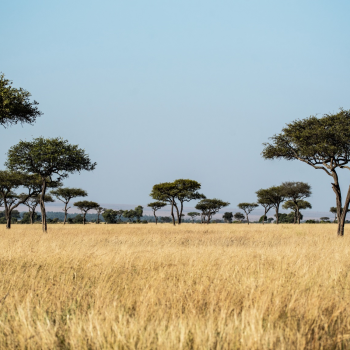
Are Trees able to communicate?
Trees are vital in that as the biggest plants on the planet, they give us oxygen, store carbon, stabilise the soil and give life to the world.
Amazingly, trees do communicate which is done by a chemical means. As a defence, tannins stored in their roots, are released permeating all parts of the trees at a crucial time when leaves are being heavily browsed or branches broken. This warning is not only sent to their own specifies, but similar species in the area, that danger is imminent, and there is a presence of herbivorous animals such as insects, mammals and birds.
Young and vulnerable trees have a significant higher tannin level resulting in leaf production channelled into forming thorns as an added form of protection.
The fact that tannins taste bitter deters animals from stripping the entire tree and animals may then be seen to move off despite plenty of foliage still available. It might be a few hours or up to a few days before tannin levels settle back to normal, where feeding may then resume. Carrying capacities means areas can only accommodate a certain number of animals throughout the year and once the risk of animals feeding becomes a threat, all plants can then become ‘toxic’
Persistent animals that continue to feed will starve as the tannins then bond with the trees protein resulting in an indigestible food intake with no or very little nutritional value. This may lead to the animal’s demise due to tannin poisoning.
With tannin levels being high, trees release a mix of gaseous ethylene compounds into the air and through wind transportation, warning their own and similar species of impending danger which results in these warned trees whom may then send tannins to the vulnerable parts for a possible onslaught. Those trees whom would have not received the warning signal, purely due to the direction of the wind and being unprepared, will soon find themselves the target of insects and mammals that moved away from the bitter foliage.
Worldwide, the fact trees are not understood for the role they play is already impacting in a negative manner and will ultimately be to our demise.
Shane Bennitt : WildLandsAfrica WildLands Guide Registered Guide Field Guiding Association of South Africa (FGASA) 26543 www.wildlandsafrica.co.za
Education in conservation results in understanding and respect for our environment.
Reference and thanks to Beat about The Bush Exploring the Wild comprehensive guide Trevor Carnaby (Recommended)
Spiders and their importance.
Spiders fall into the Kingdom Animalia
Phylum Arthropoda
Class Arachnida
Sub – order Mygalomorphs
Sub – Order Araneomorphs
Mygalomorphs – have 2 pairs of book lungs and chelicerae that strike forward and downwards. May chase or ambush their prey.
Examples are:-
Baboon spiders
Trapdoor spiders
Araneomorphs – Have 1 pair of book lungs and chelicerae that work from side to side with the majority being web making spiders. Generally use silk to capture their prey.
Examples:-
· Golden orb web spider
· Bark spider
· Kite spider
It’s important to note to understands the difference between venomous vs. poisonous. One does not get a poisonous snake, spider or scorpion, but rather it’s correct to say a snake, spider or scorpions are venomous. Venom is injected and poison ingested (eaten) Plants may be poisonous if eaten. Not all spiders are venomous despite most have venom glands which are found in the cephalothorax and few are venomous to humans.
Two types of venom are found in spiders being cytotoxic and neurotoxic.
Cytotoxic Venom – affects cellular tissue – often painless – but may become painful ulcerating into a large surface lesion. Spiders that fall into this category are the violin spiders, sac spiders, six – eyed crab spider.
Neurotoxic Venom – affects the neuromuscular synapses causing heart palpitations resulting in difficulty in breathing, raised blood pressure and severe chest pains which can lead to extreme anxiety. The black button which is one of the most dangerous spiders needs immediate medical attention. The brown button spider is less dangerous and found more often in and about human habitation.
Venom glands are surrounded by a muscle called a striated muscle which enables the muscle to be contracted so venom may be ejected through a narrow duct.
What is important to note and determines the severity and consequences of a bite are
· Amount of venom injected.
· Site of bite meaning that closer to the face or neck as opposed to the foot would be more severe.
· Age of, health, allergies of victim.
Sac spiders are aggressive and responsible to more bites to humans mainly due to favouring human habitation often found in silken sacs where their name derives from. Known to wander and hunt at night may come into contact with humans sleeping.
The six – eyed crab spider is known to offer more in the way of a powerful version of this cytotoxic venom. When it comes to venom toxicity the six eyed crab spider is the most dangerous spider in southern Africa.
The big question asked by many is what purpose do spiders serve?
One of their many important roles is they eat insects controlling the population of various species they are able to feed on. Many pesky insects such as mosquitoes and flies often find their way into the webs of spiders. Agricultural pests such as grasshoppers and many other insects that may cause problems are either trapped or hunted by spiders.
Spiders are also a food source for birds, mammals, amphibians, reptiles and fish. Many seed eating birds will due to the protein enriched spider, feed spiders to their chics.
To give an idea of how underestimated spiders may be of the 35 000 -40 000 species described worldwide, only 0.5% are considered dangerous to humans.
How do spiders feed?
Venom of spiders immobilizes their prey to which they then start the process of digesting their food outside their body by injecting enzymes with venom dissolving the body contents of the prey. The spider will then suck the juices from its prey.
How is silk made?
Silk producing glands in the spinnerets at the back of the abdomen are responsible for producing silk which is produced and released on demand. By attaching the strand to a surface the spider then walks away or will drop down from where it was positioned on what is known as a drop line. Silk is mainly made up of proteins, sugars, and lipids manufactured within the bodies.
How do spiders find mates?
Poor eyesight in most instances could make it difficult for members of the opposite sex to find mates so the use of scent pheromones being deposited on the ground allow for a mate to locate each other. Male web spiders are known when approaching a potential mate, to pluck the strands of the web relaying a vibration to the female that they are not prey. With his legs he will stroke her body so as to ensure she remains calm. The fact most males are smaller than the female, the male will need to make a quick escape in case the female becomes agitated with his presence and attacks him.
Ballooning – this is the process where spiderlings (young) will climb onto a high point eg bush, small tree, grass stalk and by continuously releasing a very fine strand of silk called a gossamer. By blowing in the wind, once it gets to a decent length the light little spider is then lifted into the air and carried in much the same way as a hot air balloon.
Transferring silk long distances such as across roads.
In the mornings, spiders that build webs daily will eat their web and by recycling the silk proteins allowing them to manufacture a new web every day. They then take up position on a tree waiting nightfall before building a new web.
Ever wondered how spiders get their webs to cross the roads between bushes?
By moving to the end of a branch, they will release a strand of silk where it will blow in the wind which over a period of time catches onto something such as a branch, bush or grass stalks. Once this has taken place and secure, the spider then tightens and reinforces this stand creating a bridge – line. Once in place, the spider proceeds with building what is known as radial lines (similar to bicycle spokes) The last and most important part is what is known as the circular catch – web made of sticky strands of silk.
Baboon spiders are responsible for the most conspicuous tunnels but without the lid found by trapdoor spiders. Known to line the tunnel with silk ensures it’s kept dry and also prevents the sides from collapsing. Baboon spiders will during the summer nights when there is dew or rain, construct a light silk roof over the entrance preventing moisture entering. Silken threads which extend around the entrance act as pressure sensors warning them of approaching prey.
Spiders are often used as indicators of a healthy ecosystem. A decline often means and early warning that changes are occurring in that area. Being predators puts them at the top of much invertebrate food chain.
Even though they may look daunting, they play a major role in our environment and need to be respected. Sadly many spider are completely misunderstood and many people will look to rid a spider by killing it as opposed to either ignoring them or if concerned putting them outside in the garden.
Shane Bennitt
WildLands Guide
www.wildlandsafrica.co.za
Ref and with thanks to…
Beat About the Bush Exploring the Wild Comprehensive Guide Trevor Carnaby (Recommended)
Nature Guides Grant & Gillie Hine (Recommended)
Do all animals lie down to sleep?

It may seem unlikely especially with some of the larger mammals like elephants yet all animals although they light sleep standing up, need to lie down to deep sleep. Elephants are capable of going into 24-36 hour period without deep REM sleep. They will however have little naps and known to lie down and sleep for a good few hours.
Deep sleep is necessary for an animal’s health and so they can experience deep sleep also known as rapid eye movement (REM sleep)
Ruminants such as antelope, buffalo and giraffe although they will lie down their heads will remain upright so as to prevent their stomach contents (cud) moving into the lungs when ruminating.
Shane Bennitt
WildLands Guide
Ref Beat About The Bush – Exploring The Wild : Trevor Carnaby (recommended)
Rhino photo Beat About The Bush – Exploring The Wild : Trevor Carnaby
Interesting facts pertaining to animal behavior.

Ethology is the science or study of animal behaviour in its natural habitat. It’s about what an animal does, when, where, how, how often and with whom.
Behaviour presents two primary components being Instinctive behaviour seen as inherited wisdom such as suckling and learned which is acquired over a period of time.
Classical conditioning is an example where hyenas may when seeing vultures circling in the sky associate this with food.
Operant conditioning is where for eg a lion cub plays with its father tail by giving it a sharp bite to which his father replies with a paw swat. After several times of doing this the cub will learn the implications of such actions. Operant conditioning is a method of learning that occurs through rewards and punishments for behaviour. Through operant conditioning, an individual makes an association between a particular behaviour and a consequence.
Modelling is whereyoung imitate the behaviours of their parents and other adult animals eg hunting. For certain animals, the capability to interpret and anticipate on another animal’s behaviour may be crucial for survival.
Social behaviours and personal survival are instinctive eg males fighting for supremacy. Antelope are sometimes seen as following a predator such as a leopard aimed at personal survival. By keeping the predator in its sight it will only feel safe when there is a distance established.
Three zones – Comfort – Recognition – Critical zones need to be understood and respected, especially when participating in self-drives / walks. This is the distance an animal requires between itself and potential danger to feel safe. This distance can be any distance and will vary according to terrain and even the presence of young.
It’s always best to respect an animal’s comfort zone however should one pass into the recognition zone animals will tend to start to show signs of discomfort such as alarm calls from kudu and bushbuck that emit a deep bark, reedbuck whistle, klipspringer may offer a soft snort or loud nasal whistle and Impala and wildebeest snort.
Once an intruder moves into the critical zone the potential prey feels extremely threated and either forced to flee or fight. A tourist was injured when looking for a good photographic opportunity and happened to corner Africa’s largest antelope the eland bull. With the eland cornered and the tourist unfamiliar with the three zones, unbeknown to the tourist he had entered the critical zone to which the elands only way out was to fight, colliding with the tourist in its desperation to get away.
Where ever one is walking and driving, take heed and respect animal’s territories especially in areas with narrow pathways or dead ends such as mountainous regions or animals with young. The head shaking with wide eyes and ears extended seen in elephants, it’s best to note this as a warning. Many times vehicles have been damaged or overturned in game reserves due to this very issue.
Parental care is found in many animals and even in animals such as the nile crocodile. Bees, termites, ants and wasps and majority of birds are well known for their parental care as do many other mammals.
Leks or Arenas are where some male birds have developed an all -male grouping during breeding season. Here a special patch of ground known as a lek or arena will see each male do his utmost to impress the females that are present in the hope he will be selected as their male of choice.
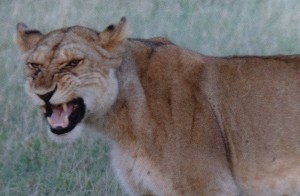
Flehmen Grimace is a facial expression seen being performed by mammals and often performed by males is a reaction to where urine is tested for pheromones in nearby females ready to mate. Lions both male and females, are often misunderstood and seen by their facial expressions as trying to prove their dominance by what may be seen as growling (Flehmen Grimace) Their heads tilt upwards and held there with the neck stretched forward. The top lip is pulled up and backwards exposing the top teeth and occasionally the gums, with nostrils wrinkled.
Protective behaviour is found in many animals such as …
Camouflage which conceals the animal’s characteristic outline. The disruptive markings that break up the body shape are primarily spots and stripes. Leopards, serval cats, present spotted coats that with the dappled light will aid camouflage. Nyala and kudu use stripes to break the body outline and shape in dense bush and woodland. The disruptive markings on zebra blur the outline shape of each animal creating an optical illusion, confusing their predators.
Warnings colours such as brightly aposematic colouring signifies either an obnoxious smell, taste, poisonous to ingest, or possibly a painful bite. The fact that these animals may be brightly coloured proves many predators such as birds, reptiles and primates are able to see in colour.
Visual defense is yet another example that will confuse prey. Examples are a large pair of false eyes which mimics the eyes of a bird of prey seen on the lunar moths wings and back of the heads of the pearl spotted owlet.
Thanatosis also known as death –feigning (play dead) is important for those that may come across such an animal. The rinkhals is famous for this in that if approached closely and it is not able to flee, may play dead, twisting the anterior part of its body sideways or even upside down, mouth open and tongue hanging out. If picked up (which is not advised) may hang limply or even strike out unexpectedly. There are many animals worldwide that adopt this defense mechanism to ward off would be predators. Once whilst out walking I came across a tree agama that was likely unable to flee in time. On approaching him he displayed very much the same symptoms as the above described rinkhals. Thinking he may have been injured I observed for a while. Standing back about 10 metres I noticed after about 5 minutes he suddenly made a quick burst for the nearest tree.
It cannot be stressed enough to be cautious when approaching animals that may be seen as dead especially those that may pose a risk. Rather observe and move away or if a home environment and if necessary contact an experienced handler to remove.
Autotomy is where we see some reptiles lose their tails as a way of saving their bodies. This is where we find lizards that may not be quick enough to escape predators and through contact from the predator, their tails breaks off the body. The idea here is that hopefully the predator will then focus on the wriggling tail allowing the lizard to flee before being noticed.
Mobbing behaviour is seen often where a raptor that may be resting in a tree or looking to feed, may attract the attention of smaller birds that feel threatened by his/her presence. One can distinctly hear the difference in that their calls or songs change to alarm calls, often attracting other birds until the raptor is surrounded by a noisy angry mob. Fork – Tailed drongos have been seen sitting on the necks of martial eagles in flight pecking away furiously. Birds may be seen mobbing snakes in trees in a similar fashion. Meerkats (Suricates) are often seen mobbing cape cobra.
.
Shane Bennitt – Wildlands Guide – WildLandsAfrica
Photos and info – Nature guide – Grant and Gillie Hine (Recommended)
Rinkhals photo and info – Johan Marias – Snakes and Snakebites Southern Africa (Recommended)
Introduction nature guiding – Johan Fourie & Izak Rust
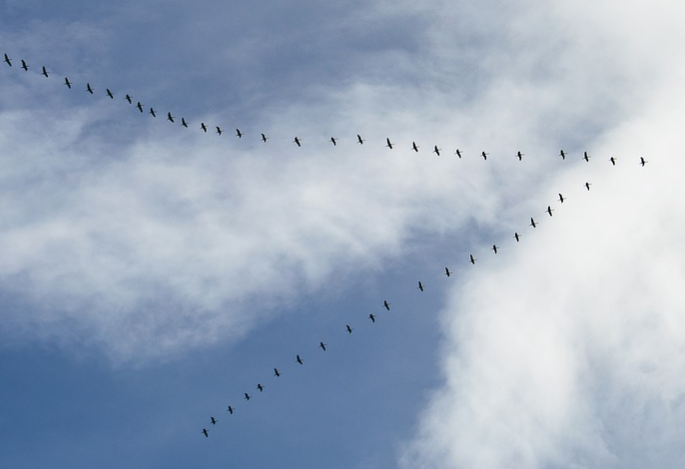
Why do some birds fly in the V formation?
When a bird’s wing is slicing through the air, the wind moving over the top of the wing is travelling faster than that below the wing. The result is a higher pressure below the wing and a lower pressure above, collectively causing lift. This happens is at the end of the wing (wing tip) as these two pressures systems come together, a vortex of turbulence creates lift near the wing – tip, hence the fact that wings curve upwards near the tip. Birds then capitalize on this lift especially the larger birds that need to cover long distances. Birds in the flock need to position themselves just behind the wing –tip of the bird it is flying with leading to a staggered or V – formation.
Shane Bennitt
WildLands Guide
Ref Beat About The Bush – Exploring The Wild : Trevor Carnaby
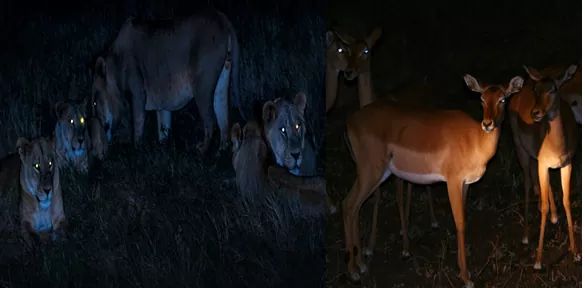
Facts pertaining to spotlights and animals eyes
The next time you either go on a night game drive or you may be watching a documentary, pay attention to the use of spotlights on animals eyes and why?
During the daylight, cones in the retina mediate vision in a state known as photopic vision. In this state colours can be perceived
However at dusk and dawn the retina is in a state of flux between rod and cone vision called mesopic vision. In this state, both colour and light sensitive vision is not very good.
In the hours of darkness the rods now mediate vision in a state known as Scotopic vision. This is a state in which colour vision is sacrificed for light gathering and light
sensitivity.
What is important to note, is that as conditions move towards darkness, the eyes adjust to the lowered light conditions and become fully dark adapted after approximately 30 to 40 minutes. With light exposure from spotlights longer than about 7 minutes, the rhodopsin is completely broken down and the adaptation to the dark conditions has to begin again usually taking another 30 to 40 minutes.
This results in diurnal animals (animals that are active during the day) such as antelope which have excellent night vision, being at risk if having to escape potential predation. Consequently, their eyes respond to light stimuli in a similar way to those of nocturnal animals.
The problem is all animals (predator and prey species) lose their dark adaptation (night vision) when exposed to a spotlight for periods more than 7 minutes.
What is also important to note is that the only animal studied that does not conform to these rules is the Lion (Panthera Leo) It’s been discovered that a special auto fluorescent chemical in their retinas combined with the tapetum, allows them to have night vision that is in close intensity to daylight.
Shane Bennitt
WildLandsGuide
Ref to Guiding Skills – Grant Hine

Why is it important to not pick up a tortoise?
Tortoises may become stressed when picked up and react by urinating. During the summer periods and even warm winter days, by them urinating may lead to dehydration especially if water is not available or in near proximity.
Water is stored in an anal sac called the bursa. This water is used when needed to soften the soil for egg – laying or reabsorbed for bodily functions.
Only under circumstances such as fires or being on a busy roadway would it be necessary but for the tortoise to possibly remain in their normal facing position.
Can a tortoise swim?
The leopard tortoise (also called the mountain tortoise in some areas) is reputed to be the only tortoise that is able to swim. All other tortoises weigh more than the equivalent volume of water and will sink and drown.
Shane Bennitt
WildLands Guide
Ref Beat About The Bush Exploring The Wild Comprehensive Guide Trevor Carnaby & Nature Guides Grant & Gillie Hine
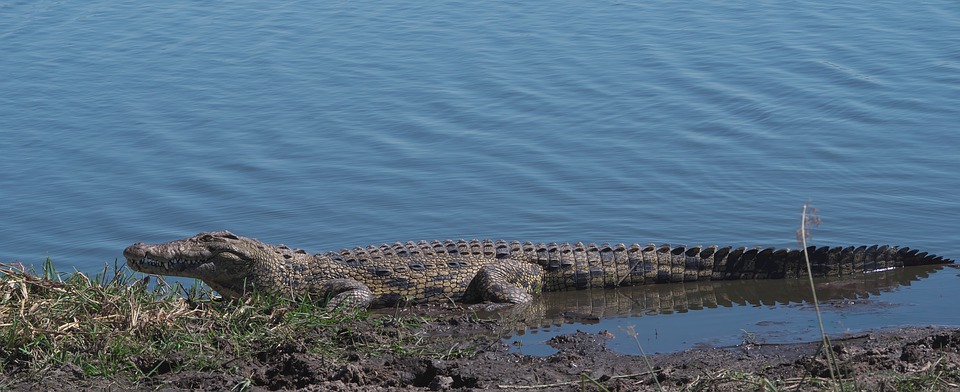
Nile Crocodiles
Some facts to note…
Able to weigh up to 1000 kgs reaching nearly 6 metres.
They are able to catch prey eg catfish / barbel under water without drowning – reason is valves in the nostril close and the throat valve called a palatal valve closes. This means it cannot swallow its prey under water coming to surface for the throat flap to open allowing the crocodile to then swallow.
How long can a crocodile remain under water? Providing it stays inactive, a large crocodile can remain under water for up to an hour or so slowing its heartbeat down to 3 beats per minute. Water temperature will determine how long they can submerge.
Which section of jaw moves? The upper jaw is an extension of the skull and only the bottom jaw can be moved.
On hot days when a crocodile is seen basking in the sun with its mouth open, it has to hold its head upwards allowing the bottom jaw to open resting on ground. This is to regulate body temperature.
During cold mornings and late afternoons, crocodiles lie with open jaws towards the sun allowing direct sunshine into their mouths. The heat is taken up and a soft membrane in the mouth assists with dispersing the heat throughout the body through blood circulation which then will raise body temperature.
One of the many purposes of crocodiles is that they are opportunistic feeders taking either live prey or carrion (dead meat) This is one of the reasons crocodiles play a primary role in conservation, ensuring that rotten material removed from the aquatic environment.
Does the effect of temperature determine gender of the eggs?
Yes! The sex of hatchlings is dependent on the egg incubation average temperature in the nest hole.
Female crocodiles develop at temperatures of 26 to 30 degrees celsius and males at a higher temperature of 31 to 34 degrees celsius
(Note the opposite applies to the temperature / gender association in tortoises)
It’s estimated that only one crocodile out of a nest of 50 eggs will reach maturity.
How long can they live?
Some Nile crocodiles have been recorder to live up to 100 years or more.
Wildlands Guide : Shane Bennitt
Ref thanks to Nature Guide – Grant and Gillie Hine and Beat About The Bush – Trevor Carnaby
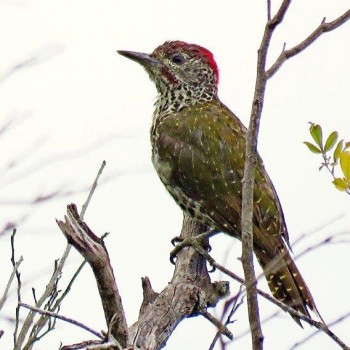
How do Woodpeckers not hurt themselves when vigorously pecking at trees?
Woodpeckers when vigorously pecking at trees, are at danger of bashing their brains out, however have been created with various mechanisms to absorb and disperse the shock associated with bill – hammering, (correctly called chiseling and pounding)
The brain and spinal cord have very little cerebro – spinal fluid preventing shockwaves that would disrupt nerve functioning.
They have a bony strengthening mechanism at the base of the upper part of the bill that deals with the impact and prevents the bill ‘cracking off’
Some species, a hinge between the frontal and nasal bones of the bill helps to absorb and dissipate shock at impact.
The muscles at the base of the lower mandible are also specialised, contracting a split second prior to each impact absorbing a lot of the shock transmitting this through the bottom of the skull below the brain.
Shane Bennitt
Wildlands Guide
Ref: Beat About the Bush Exploring the Wild – Trevor Carnaby
Photo : Tim Cockcroft Birding – Guided Birding Tours
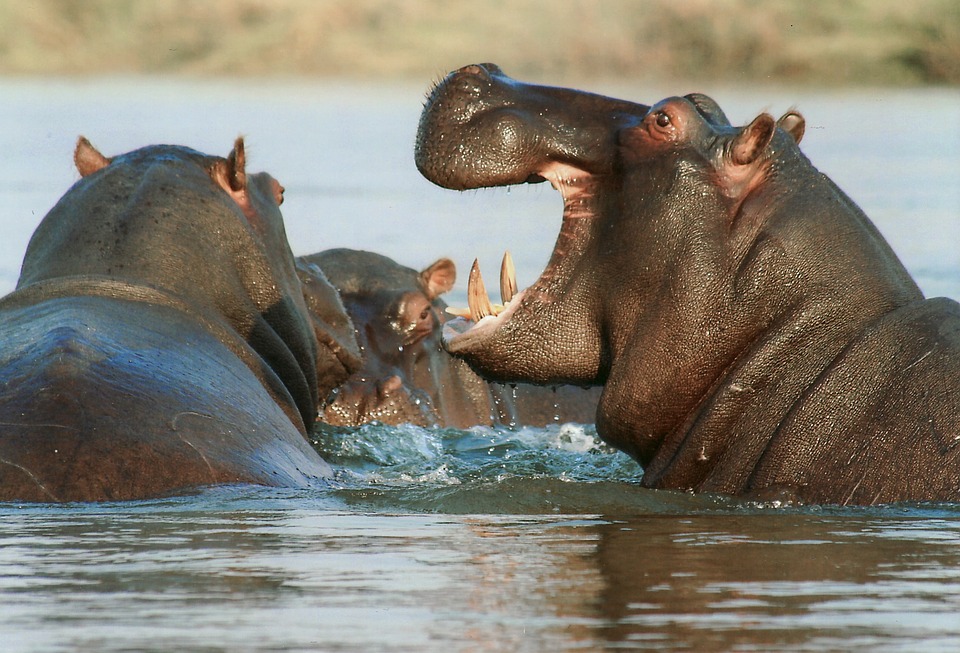
Can Hippos Swim?
The answer is no they cannot swim at all as they lack adaptions required for swimming such as webbing on their feet. They also lack powerful appendages such as flippers or a tail for propulsion.
Hippos are bottom dwellers fulfilling vital functions as dredgers keeping slow moving waterways open minimizing the effects of siltation. At times they can have all four limbs off the ground owing to buoyancy effect. They push their way to the surface in deep water slowly returning to the bottom. This is not swimming, however as buoyancy cannot be controlled, they cannot propel themselves along the surface in deep water.
The time period under water is about 5 minutes and about 8-10 minutes if asleep, before requiring to surface.
A habitat prerequisite is slow moving water deep enough for them to submerge yet not deep enough to make surfacing for air impossible.
Africa needs an animal that is able to keep waterways open and oxygenated. Defecating in the water returns nutrients to the water utilized by fish and plants.
Shane Bennitt WildLands Guide
Ref Trevor Carnaby – Beat About The Bush
Facts pertaining to bird migration
Bird migration is one of the enduring mysteries of ornithology. Although the complexities are still not completely understood a lot more is known than in the past. Migration can be defined as predictable journeys usually from one breeding area to a non-breeding area and back again as well as from extravagant summer banquets to another.
Over 130 bird species in Southern Africa are migrants either undertaking epic intercontinental journeys or moving within the African continent itself. The timing of migration seems to be controlled primarily by changes in day length and food shortage. Migrating birds navigate using celestial cues from the sun and stars, the earth’s magnetic field, and mental maps.
Southern Africa migrants are classified into 3 main categories…
1. 1. Palaearctic – African migrants: Have the longest journeys flying thousands of kilometres from Europe and Asia all the way to Africa and back again. Primarily non – breeding migrants arrive in Southern Africa at the onset of summer after having bred further north. Palaearctic species that migrate to southern Africa include numerous waders, the Steppe Eagle, Steppe Buzzard, White Stork, European Roller, Barn Swallow and Several Terns.
2.
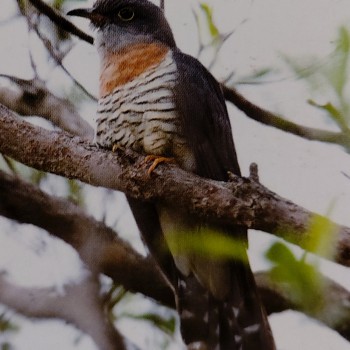
2. African Wanderers: Intra – African migrants do not venture abroad like the Palaearctic – African Migrants but move annually between breeding and non-breeding grounds within the African continent. Examples of such are Wahlbergs Eagle, African Reed Warbler, Greater Striped Swallow and many Cuckoos. Red Chested and Diederik Cuckoos breed in both northern and southern Africa.
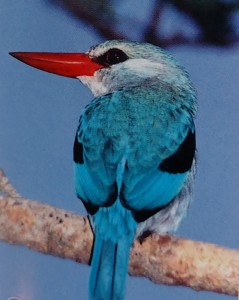
3. 3. Domestic travellers: Local migrants do not take long epic journeys but rather travel locally over shorter distances within one area eg the Mangrove Kingfisher.
Vagrants when battling extreme weather conditions, migratory birds may sometimes be blown off course or lose their sense of direction and arrive at completely unintended destinations. Examples of vagrant birds turning up in South Africa include the Little Blue Heron, Greater Sheathbill, Eleonora falcon, American Purple Gallinule, Hudsonian Godwit, Buff- breasted Sandpiper and White – Throated Bee-eater. Vagrants tends to be juveniles, inexperienced birds at greater risk of getting lost on migration, than the older, more experienced individuals.
Orientation and navigation.
Migratory species will plot their plans so each species follows the most efficient route possible. Just as we follow concrete highways that link destinations, so too do migratory birds follow apparently distinct aerial flyways that cross and link continents. These flyway routes are the most efficient paths for birds to follow, taking into account the distance, geographical barriers and landmarks, favourable winds, stop overs and their particular flying style – be it soaring or flapping.
Some take advantage of updrafts and other wind patterns or avoid geographical barriers such as large stretches of open water.
The routes taken on forward and return migration are often different. Birds may use specific stop over sights where they rest and refuel in places where there is reliable food before their next stage of their strenuous stage of their journey.
Many, if not most, birds migrate in flocks. For larger birds, flying in flocks reduces the energy cost. Geese in a V-formation may conserve 12–20% of the energy they would need to fly alone. (See my earlier article wild facts www.wildlandsafrica.co.za)
Seabirds fly low over water but gain altitude when crossing land and the reverse pattern is seen in land birds.
Navigation is based on a variety of senses.
Birds have a highly complex internal navigation system – both physical cues, such as land marks, the position of the sun and the stars and an innate (inborn; natural) internal compass ability to detect the earth’s magnetic fields.
Some birds are able to detect ultra – violet light which passes through the clouds and can help to track the position of the sun on cloudy days. Even many resident birds use the sun to orientate themselves in their daily activities.
Not only has navigation been shown to be based on a combination of other abilities including the ability to detect magnetic fields (magneto reception), but visual landmarks as well as olfactory cues (An olfactory cue is a chemical signal received by the olfactory system that represents an incoming signal received through the nose. This allows humans and animals to smell the chemical signal given off by a physical object)
The ability of birds to navigate during migrations cannot be fully explained, however the ability to successfully perform long-distance migrations can probably only be fully explained with an accounting for the cognitive ability of the birds to recognize habitats and form mental maps.
Migratory birds may use two electromagnetic tools to find their destinations. One that is entirely innate and another that relies on experience. A young bird on its first migration flies in the correct direction according to the Earth’s magnetic field, but does not know how far the journey will be. With experience it learns various landmarks and this “mapping” is done by magnetites in the trigeminal system, which tell the bird how strong the field is. Because birds migrate between northern and southern regions, the magnetic field strengths at different latitudes.
In polygynous species with considerable sexual dimorphism, males tend to return earlier to the breeding sites than their females. This is termed protandry.
The magnetic compass.
The earth acts like an enormous magnet, producing a magnetic field that varies in angle over its entire surface, producing more magnetic force at the poles than the equator. Birds are highly sensitive to these fields and able to align themselves accordingly on migration. There is a neural connection between the eye and “Cluster N”, the part of the forebrain that is active during migrational orientation, suggesting that birds may actually be able to see the magnetic field of the earth.
The star compass.
Many birds that travel at night are known to rely heavily on stars to guide them on their journey. Experiments on captive migratory birds within a planetarium have shown that they make use of the star compass orientating themselves accordingly as the artificial star pattern if formed.
On cloudy nights when the stars are not visible, birds are able to orientate themselves according to the earth’s magnetic fields.
Inherited or learned?
An intriguing question is how birds migrating for the first time know where to go. Is this Learned or inherited?
Many observations and experiments have shown that both the inclination to migrate as well as the route to follow on migration, is largely inherited. This is supported that by the fact that young birds leaving on migration either before or after their parents still manage to find their way on their first epic journey.
Migratory cuckoos whose chicks are raised in a family of non – migratory birds (brood parasites) demonstrate that migratory instincts are inherited.
Migratory birds in captivity show migratory restlessness where they hopped and fluttered on their perches facing the exact direction in which they would be flying on migration.
Diurnal migration in large birds using thermals.
Some large broad-winged birds rely on thermal columns of rising hot air to enable them to soar. These include many birds of prey such as vultures, eagles, and buzzards, but also storks. These birds migrate in the daytime. Migratory species in these groups have great difficulty crossing large bodies of water, since thermals only form over land, and these birds cannot maintain active flight for long distances. Mediterranean and other seas present a major obstacle to soaring birds, which must cross at the narrowest points.
Funnel – shaped migration results in where thin land corridors linking different continents may be characterised by funnel –shaped concentration of thousands of migratory birds all avoiding a sea crossing. Classic examples of this phenomenon occur over Israel and Gibraltar as millions of birds migrate. More common species, such as the European honey buzzard , can be counted in hundreds of thousands in autumn. Other barriers, such as mountain ranges, can also cause funnelling, particularly of large diurnal migrants.
Looping and leapfrogging
Rather than migrating to and from their breeding grounds along the same route, certain birds follow a circular migratory route known as loop migration. The Red – Backed Shrike migrates in a giant loop from Europe to central and Southern Africa and back again in anti-clockwise directions.
Leapfrog migration describes certain bird populations that breed furthest north then fly furthest south in the non-breeding season, when leapfrog over other populations of the same species which breed at intermediate latitudes. Reasons include food competition, escaping predators and climatic differences. Examples are the common ringed plover.
Record Holders
The Artic Terns are known to migrate up to 50 000 kms from their breeding grounds in the northern Arctic tundra to the Antarctic pack ice and back again each year. The fact they are known to live up to 25 years it is possible that they may fly up to one million kms plus in their lifetime also experiencing the most daylight hours than any other bird.
Most small migratory birds fly less than 2000m above sea level, Waders between 2500 and 3000m above sea level. Raptors are known to migrate at an altitude of 4000 – 6800m.
The Ruppells Vulture holds the record for the highest flying bird. One was recorded as being hit by a passenger jet at 11 300m.
Fuel for flight
Many migratory birds have remarkable endurance, regularly making extremely long non – stop flights without landing to feed or rest. These birds draw on large fat reserves to fuel fat reserves to fuel their long and punishing journeys. They will indulge in eating binges consuming enormous quantities of food before leaving. Fat is a very efficient fuel for such journeys.
Migrant birds are also adapted to coping with low levels of oxygen when flying at high altitudes.
Wings also differ with migratory vs. non – migratory birds such as the Carmine Bee –eater wings are longer and narrower than the more rounded wings of the resident White – Fronted Bee – eater.
.
Nocturnal migratory behaviour
For many birds flying at night is an energy – saver as the air is cooler, denser, and calmer allowing for more efficient flight and less likelihood of headwinds or to be blown off course. Also reduces water loss. Birds also use stars for navigation.
While participating in nocturnal migration, many birds give ‘Nocturnal Flight Calls’, which are short, contact-type calls. These calls likely serve to maintain the composition of a migrating flock, and can sometimes encode the gender of a migrating individual. They also likely serve to avoid collision in the air.
Nocturnal migrants land in the morning and may feed for a few days before resuming their migration. These birds are referred to as passage migrants in the regions where they occur for a short duration between the origin and destination.
Nocturnal migrants minimize depredation, avoid overheating, and can feed during the day. One cost of nocturnal migration is the loss of sleep. Migrants may be able to alter their quality of sleep to compensate for the loss.
Threats to habitat
Sadly migration carries a high costs in predation and mortality, including hunting by humans. The distances involved in bird migration mean that they often cross political boundaries of countries where conservation measures require international cooperation. Several international treaties have been signed to protect migratory species. The only way to conserve migrants is to protect their existing breeding and non – breeding grounds, stop over sites and expand the existing global network of protected areas.
Education in conservation worldwide starting at a very young age would no doubt make a significant difference to our amazing animal planet.
Shane Bennitt: Wildlands Guide
Ref: Birds – The Inside Story – Rael and Helene Loon
Wikipedia
Photos: Ian Sinclair and Peter Ryan
For more wild facts refer to www.wildlandsafrica.co.za
Wahlberg’s Eagle : Red – Chested Cuckoo : Greater Striped Swallow : Mangrove Kingfisher

Bees – without them we would be doomed!
Bees worldwide are not only extremely important for humans, but also for entire ecosystems to function. Bees ensure plants reproduce through pollination and are the most important group of pollinators moving around hundreds of flowers per day collecting nectar. Without bees, flowers wouldn’t grow into fruits or seeds affecting the food source for millions of animals and about one third of the food we eat.
South Africa has 2 kinds of bees… the Cape honeybee and the African honeybee.
Cape honeybees are currently displacing African honeybees which is a problem as African honeybees are hardier and more effective pollinators.
How to recognise a Cape Honeybee?
While still having the characteristic honeybee striped abdomen, the Cape honeybee is darker in colour compared to other honeybees.
How to recognise an African honeybee?
While still having the characteristic yellow-striped abdomen of honeybees, the African honeybee is slightly smaller. Its upper body is covered in short, fine hair and its abdomen is striped with black.
Why do bees make honey?
Bees feed mainly on nectar and pollen from flowers, but because these are only freely available in spring and summer, there is a need to find ways of surviving winter. They do this by making honey that is stored and becomes the staple diet for long cold months.
How is honey made?
Honey is manufactured by evaporating water from the dissolved sugars (nectar) brought back from flowers and deposited in hexagonal storage vats. Water evaporates from the nectar and it reduces to become honey.
A beehive or nest consists of a honeycomb which in turn is made up of hexagonal cells made of beeswax. Worker bees “chew” the nectar brought to the hive to break it down into simple sugars. They spread the nectar around the honeycomb. The bees also excrete enzymes that kill germs which explains why honey can last so long.
Dehydration takes place naturally over time but also aided by wind created from the wings of the bees buzzing nearby. In summer, the worker bees beat their wings to circulate cool air. In the winter they shiver to burn more energy and release body heat. This is a deliberate practice for fanning and cooling the entire hive. The wax melts easily so it’s important to maintain the temperature inside the hive.
Transportation – When moving around the flowers, the hairs on the body of honeybees collect pollen (and a little nectar) which is then groomed together into special sacs called pollen baskets found on the lower section of the last pair legs. This is to help with the efficient transport back to the hive where it is fed to offspring and made into honey.
Worker Bee – For the first 3 weeks of a worker bee’s life, she stays in the nest. She looks after the queen bee and the larvae and processes pollen and nectar brought to the hive by older worker bees.
Drones – There are usually 100 male bees in a hive called drones. Their only job is to mate with the queen.
Queen bee – The queen lays eggs all day. (Without a doubt the most important queen in the world) Fertilised eggs become female worker bees and unfertilised eggs become male bees – the drones.
Facts about honeybees:
Bees have five eyes (two compound eyes and three single lens eyes) and a worker bee’s main eyes have nearly 7000 lenses.
An electrostatic charge on the bee’s hairs attracts pollen and the leg brushes, then scrapes, the pollen from front to back, where it collects in the pollen basket – a wide, flat area on the rear pair of legs.
The proboscis (long tongue) is an airtight, straw-like tube that sucks up nectar and also works in reverse to feed offspring from the honey stomach.
Getting around – A honeybee has two sets of wings used for flight. The wing hooks enable the bee to attach one of each set of wings together during flight for maximum efficiency.
Communicating – Honeybees communicate by performing a series of dance moves. Through the number of turns, duration of the dance and the moves themselves, they can communicate the distance of the food and the direction of the food in relation to the sun.
Facts
6 = number of kilometres a bee can fly per day to play his vital role.
25 = speed in km/h a bee can reach while flying.
20 = the amount of honey in kilograms that a healthy hive can produce in a year.
100 = the number of flowers a bee can visit in one day.
2000 = the number of eggs a queen bee can lay in a day.
80 000 = the number of worker bees in a hive.
Bees are in decline in many intensely farmed areas of the western world due to the cocktails of pesticides. Should pollination be man-made, it is estimated that in order for humans to do the job of bees worldwide, would cost $300 billion per year.
HELP… Bee populations are shrinking and bees are threatened by destruction of their natural habitats, diseases from other countries and the use of pesticides in farming.
Don’t destroy a hive; there will be those who will have it safely removed.
Shane Bennitt : WildLands Guide
Ref: Mbulelo Mswazi Biodiversity Science and Policy Advice (SANBI)
Trevor Carnaby – Beat about the bush – exploring the wild
Elizabeth Wasserman
Photos (SANBI)
Role-players in our environment, do they get the respect and recognition they deserve?
Our world would be a very unhealthy and most likely unlivable place if it wasn’t for the role predators, scavengers and decomposers played. All animals and plants like them or not, play an essential part in making our planet a better place for all to enjoy.
Many of our predators, scavengers and decomposers such as hyenas, crocodiles, vultures, pangolins, sharks and even many insects, play a vital role getting rid of and removing dead organic and waste products, that if not for these marvelous animals, our planet would be a cesspool of animal remains and dead plants/trees. Thanks to them both our marine and terrestrial environment becomes a safer and healthier world to live on…yet how many of us know and appreciate this fact?
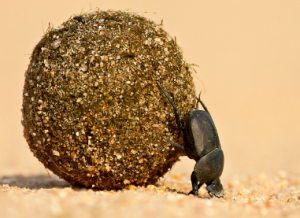
One example is our hard working little dung beetles. Just by recycling dung, flies are given less chance to breed therefore helping to reduce the spread of diseases.
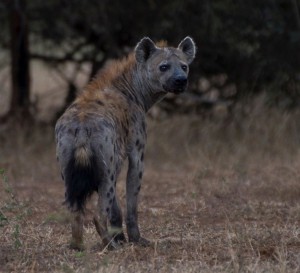
Spotted and brown hyenas deserve far more credit than they are given and often disliked by many due to the lack of understanding of their importance. Both the brown and spotted hyenas are known to hunt and scavenge given the opportunity, with the spotted hyenas been the most effective in their hunting skills. The brown hyenas are recorded as being solitary and tend to scavenge.
Spotted hyenas are bigger and often due to numbers tend to be more self-confident and brave enough to challenge lions, and should never be underestimated.
Hyenas have incredibly powerful jaws and very strong neck muscles being capable of getting through their prey or carrion at a rather rapid rate. Because of this, they are able to ingest a lot of material from carcasses that would normally be left by most predators. Their stomachs have very powerful digestive acids being able to fully or partly digest cartilage, bone, and teeth. They cannot digest the keratin of hair, hooves and horns which brings in one of the other important little decomposers mentioned below.
Nile crocodiles play much the same role in that they are opportunistic feeders taking live prey or carrion. They play a primary role; ensuring rotting material is removed from the aquatic and shoreline environment.
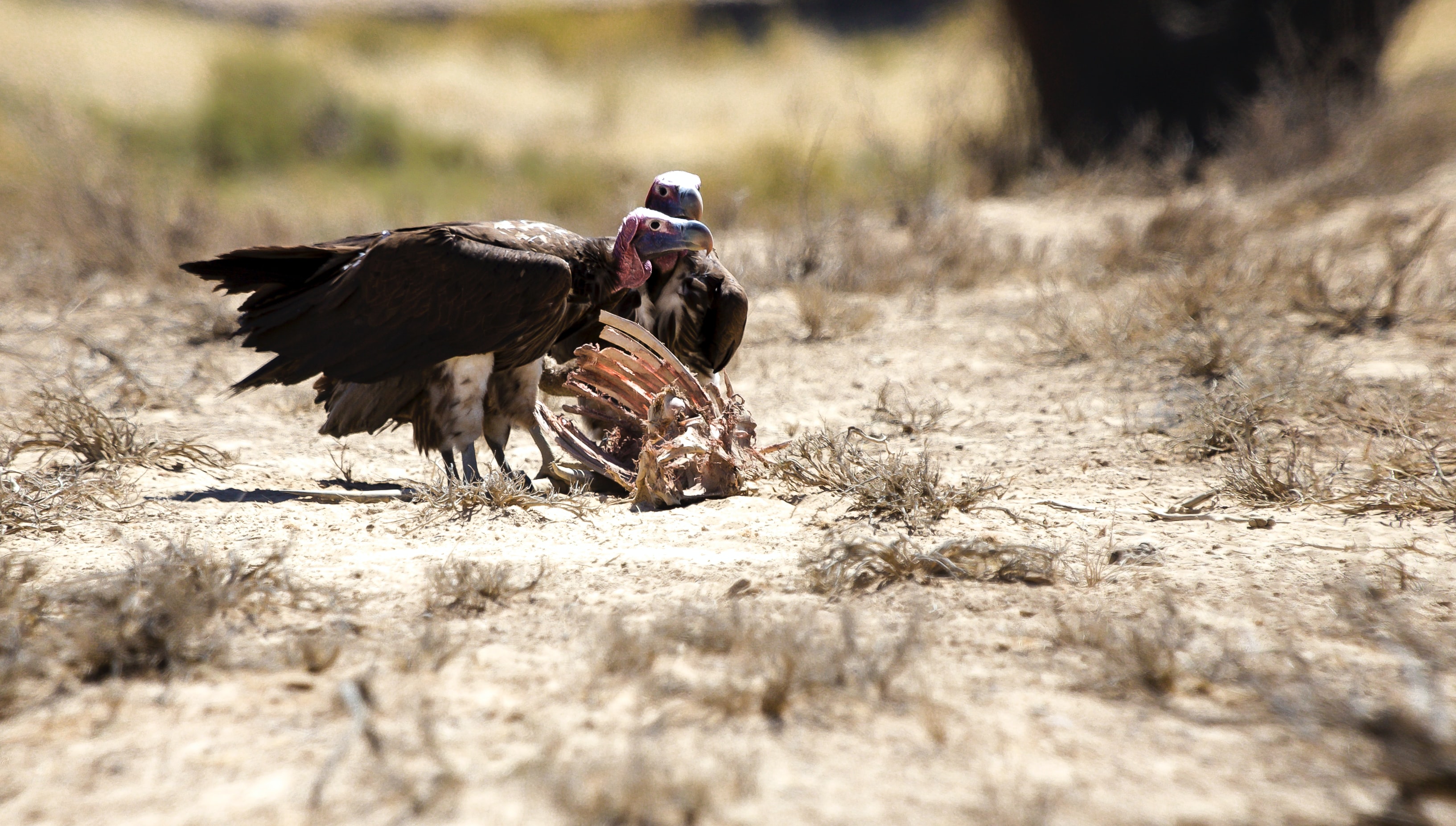
With Vultures, not only are these spectacular birds of prey / raptors incredible to witness, but their purpose and understanding to our environment is in most instances completely overlooked and unappreciated.
When found at a kill, hierarchy is most definitely noticeable based on their size and specialisations of their bills. This will determine what they eat from a carcass which is also known as feeding succession.
In terms of size the lappet – faced vulture and the cape vulture are the largest and most dominant. The lappet-faced vulture is known for having the most powerful bill, easily ripping through sinews, tendons and hides. Animals that have died of natural causes and still intact, it’s the lappet-faced vulture that would be needed to start the process of opening up the animal, and getting the feeding process underway. Other vultures will wait patiently their turn to continue the process of stripping and cleaning the carcass.
The white – backed vulture has a further role to play in that it has a tongue that is adapted to eating the softer tissue inside the carcass. As the carcass is reduced in size, the small hooded vulture because of its slender bill is able to get to bits on and around the carcass that are of no interest to other species.
The palm-nut vultures feed mainly on palm fruits, however to add to their function and purpose, may be found feeding on soft inner parts of crab where the carapace has been removed. They are also known to feed on termites and found scavenging on edges of lakes, rivers and estuaries. Palm – nuts are also known to play a cleanup role feeding on road kill.
The bearded vulture feeds mainly on bones from fresh and old carcasses. Known to breakdown bones from skeletons by tearing or cutting tendons and ligaments with its bill, the bearded vulture is capable of swallowing bones up to 250 x 35 mm in size where the highly acidic digestive juices start immediately the bone reaches the throat. Bones that are too large to swallow are carried to high altitudes then dropped onto rocks below breaking open allowing for the extraction of marrow.
The Hooded vulture is known to grab scraps and fly off, feeding on carrion at carcasses of any size. With unopened carcasses it will feed on the eyes. The Hooded vulture is also known to feed on fish stranded in drying pools.
Sadly these amazing scavengers in most instances due to the possible lack of government protection, education and understanding of their vital purpose, are often found on the receiving end of having been poisoned, may have fed on poisoned animals, are hunted or are killed for other reasons.
Other important insect decomposers such as the larva of skin or trogid beetles will then take over feeding on the final remains of dead animals. The horns and hooves of dead animals are consumed by the larva of horn-borer moths.
Blowflies consume the remains of meat of the remaining carcasses and Woodborers will eat away trees where bark has been stripped by elephants or damage that may have been caused by lightning. Termites then take over once the tree has died and fallen to the ground where decomposition takes place.
The amazing little Aardvark (Ant bear) and the Pangolin, which are the most trafficked mammal in the world, play their role in feeding on ants and termites.
Sharks are the apex predators of the oceans. The role of sharks is to keep other marine life in healthy balance and to regulate the oceans. They play a crucial part at the top of the food chain by maintaining balance in the oceans. According to a report in marine policy, an estimated 100 million sharks are killed indirectly and directly by humans every year and by destroying shark populations will destroy our oceans and our life support system.
Sharks fins are used in a popular dish called shark fin soup, which is a symbol of status in Chinese culture. In the past, Chinese emperors favoured the soup as a dish that honoured guests because it was thought to have medicinal benefits and represented a victory against powerful sharks.
These cruel acts see sharks having their fins removed and returned to sea alive which is pretty much the same as removing the wings from an airborne airliner.
Sadly a large percentage of the world’s population, including many governments, due to being uneducated, greed, medicinal and traditional beliefs, continue to allow or turn a blind eye to the pillaging of our fauna and flora.
Credit has to be given to those worldwide making every effort to curb poaching by imposing hefty fines and long jail sentences. All too often it’s the minority of conservationists who strive, often to their demise, to make a positive difference to our world and who need to be applauded.
With knowledge comes understanding which would make a significant difference in the way people think and behave going forward.
Shane Bennitt – WildLands Guide
Photos Gavin Udal, Nature guide Grant & Gillie Hine
Ref portion to – en.wikipedia.org ›